Digital Talismans & NFT Materialization
Blockchain and Digital Talisman
What Is NFT Materialization?
NFT materialization is the structural transformation of intention into verifiable digital ownership.
An NFT is not merely a digital image, but a cryptographically secured record stored on blockchain infrastructure.
Through the Hybrid Calligraphy-to-AI™ method, silent intention is translated from physical gesture into programmable on-chain presence.
Materialization, in this context, is not production — it is the formal encoding of meaning into decentralized networks.
Digital Talismans as Web3 Infrastructure
Digital Talismans function as both symbolic artifacts and structural assets within Web3 ecosystems.
By leveraging standards such as ERC-721 and ERC-1155, along with scalable blockchain networks,
they establish scarcity, traceability, and transparent ownership.
Beyond speculative market cycles, NFT materialization builds a durable layer of digital property rights,
bridging intention, technology, and economic architecture within decentralized systems.
CONCEPT

Concept Architecture | PowerfulJIZO Ecosystem
Materialization as Structural Formalization
Materialization is not production. It is the structural formalization of intention within decentralized infrastructure.
In the context of NFTs, materialization encodes meaning into verifiable on-chain records, transforming silent intention
into persistent digital presence. Through cryptographic ownership and smart contract logic, what begins as an internal gesture
becomes a traceable, programmable asset within blockchain architecture.
Digital Talismans Beyond Representation
A Digital Talisman is not merely an image, but a symbolic node within a broader Web3 ecosystem.
It integrates artistic origin, metadata architecture, and blockchain verification into a unified structure.
Scarcity, transparency, and ownership converge to create an asset that bridges philosophy and infrastructure,
silence and code.
Concept Architecture | PowerfulJIZO Ecosystem
Ecosystem Architecture
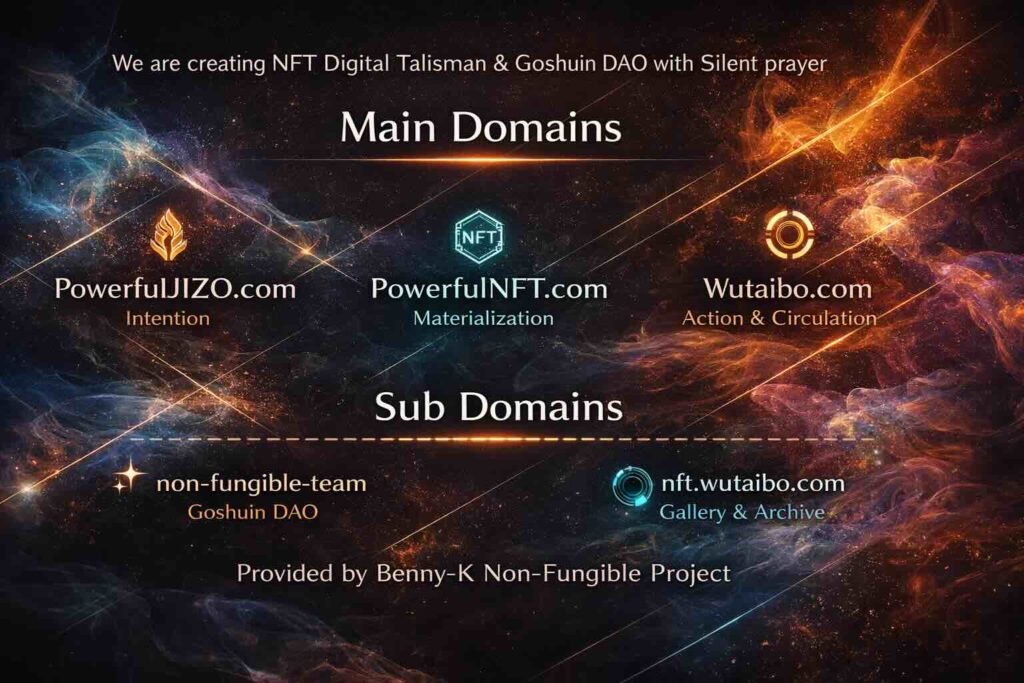
Quiet Structure — Layered NFT Ecosystem Architecture
Layered Structural Design
Ecosystem Architecture within PowerfulNFT is designed as a layered structural system rather than a collection of isolated works.
Intention, materialization, circulation, archive, and governance operate as interconnected layers.
Each NFT functions as a node within this architecture, linking artistic origin, blockchain verification, and long-term record integrity.
This layered approach ensures coherence, scalability, and conceptual continuity across the ecosystem.
From Asset to Networked Presence
Within this framework, NFTs are not treated as standalone commodities but as networked presences.
Smart contracts, metadata logic, DAO integration, and marketplace circulation form a structural loop
that transforms static tokens into evolving components of a decentralized system.
Ecosystem Architecture therefore emphasizes sustainability, interoperability, and the long-term accumulation of non-liquid value in Web3.
Hybrid Calligraphy-to-AI™ Method

SILENT PATH — After the Seal Dissolves
Hybrid Calligraphy-to-AI™ — NFT on OpenSea
From Physical Gesture to On-Chain Structure
The Hybrid Calligraphy-to-AI™ Method begins with physical calligraphic movement — ink, gesture, and intentional trace.
This analog origin is not replaced by AI, but extended through it. Artificial intelligence functions as a refinement layer,
structuring and clarifying the original gesture without erasing its intentional core.
The result is not automated production, but a controlled translation from embodied expression into programmable digital form.
Encoding Intention as Digital Infrastructure
Through this method, silent intention becomes structurally encoded within NFT architecture.
The process integrates visual transformation, metadata design, blockchain minting, and smart contract logic
into a unified materialization flow. Hybrid Calligraphy-to-AI™ is therefore not a stylistic technique alone,
but a structural protocol connecting artistic origin, decentralized verification, and long-term digital permanence.
Materialization of Silent Intention
Original Digital Talisman — Origin of the Hybrid Calligraphy-to-AI™ Method
NFT Infrastructure
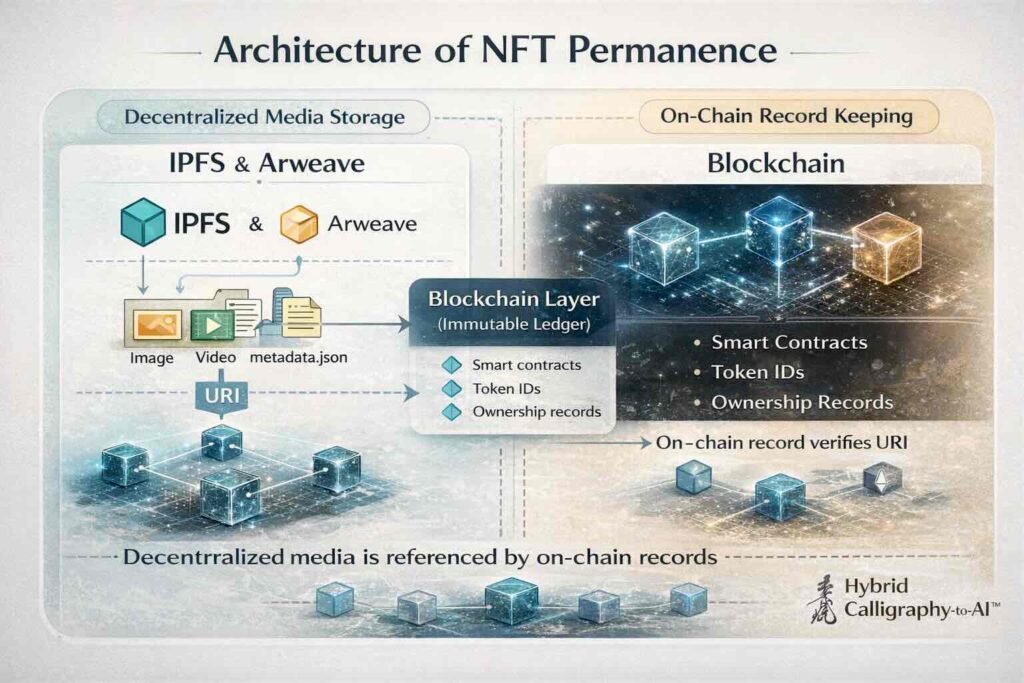
Architecture of NFT Permanence — IPFS, Arweave & Blockchain Layers
Blockchain as Foundational Settlement Layer
NFT infrastructure is built upon decentralized blockchain networks that provide immutability, transparency,
and cryptographic verification. Smart contracts define minting logic, transfer rules, and royalty structures,
while token standards such as ERC-721 and ERC-1155 ensure interoperability across marketplaces.
This infrastructure transforms digital files into verifiable property by anchoring ownership records
within distributed ledger systems rather than centralized databases.
Integrated Engineering, Market, and Ecosystem Logic
Beyond the blockchain layer, NFT infrastructure includes metadata architecture, decentralized storage systems
(IPFS, Arweave), marketplace liquidity mechanisms, and ecosystem governance models.
Engineering precision, economic positioning, and long-term structural design must align
to create durable digital assets. NFT infrastructure therefore connects technical standards,
market structure, and experimental development into a unified Web3 framework.
NFT Complete Guide (2026)
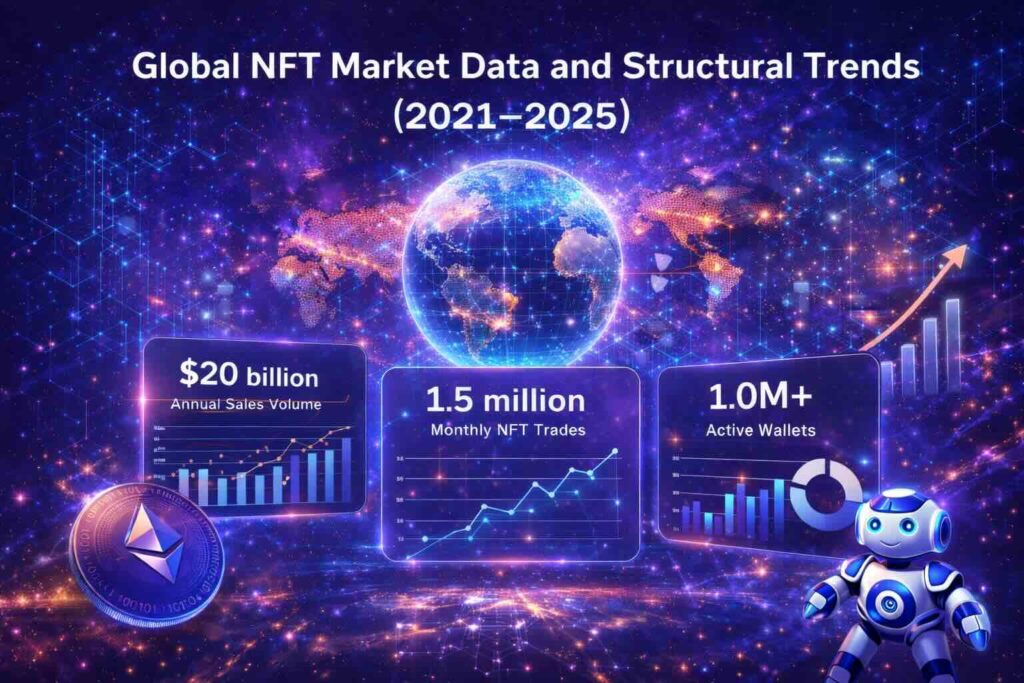
Global NFT Market Data and Structural Trends (2021–2025) infographic with blockchain network and market statistics
A master-level structural reference covering blockchain architecture,
NFT economics (2021–2025), DAO integration, security modeling,
and long-term Web3 strategy.
PowerfulJIZO Ecosystem™ Tour Guide
Digital Talisman Framework
Within the PowerfulNFT ecosystem, Jizo, Jōmon/Miko, and Japanese Beauty works are structured as Digital Talismans —
cryptographically verifiable digital property recorded on decentralized blockchain infrastructure.
Copyright & Rights / Terms / Transparency
May today be a good day.
May good fortune come your way.